Windows Compact Setup
This guide covers setting up the Midnight development environment on Windows using Windows Subsystem for Linux (WSL). We'll walk you through the essential setup steps, including installing and configuring WSL, Docker Desktop, and the Midnight Lace wallet.
By the end of this tutorial, you'll have a development-ready environment for building DApps on the Midnight Network, running the proof server, and interacting with the network.
Install Ubuntu
Developing DApps for the Midnight network often requires compiling and running various components (like the proof server or complex scripts) that are traditionally Linux-based. The Windows Subsystem for Linux (WSL) is a critical component that allows you to run a native Linux environment directly within Windows without the overhead of a traditional virtual machine.
Step-by-step installation:
Open the Start Menu on your Windows desktop.
Search for Windows PowerShell (or Command Prompt) and right-click on the result. Select Run as administrator. This elevation is necessary to install system-level features like WSL.
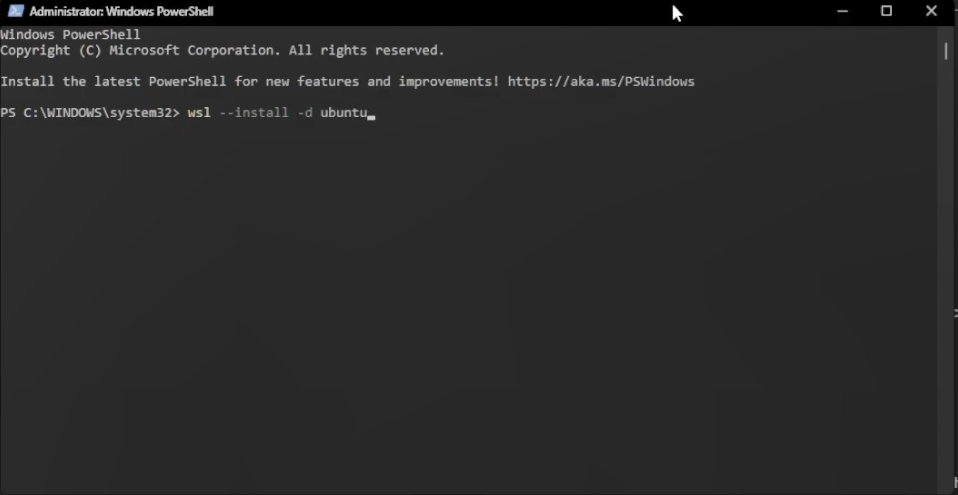
This command performs three primary functions automatically: It enables the required Windows features for WSL (Virtual Machine Platform and Windows Subsystem for Linux). It downloads and installs the recommended Ubuntu distribution (the default and most widely supported Linux environment).
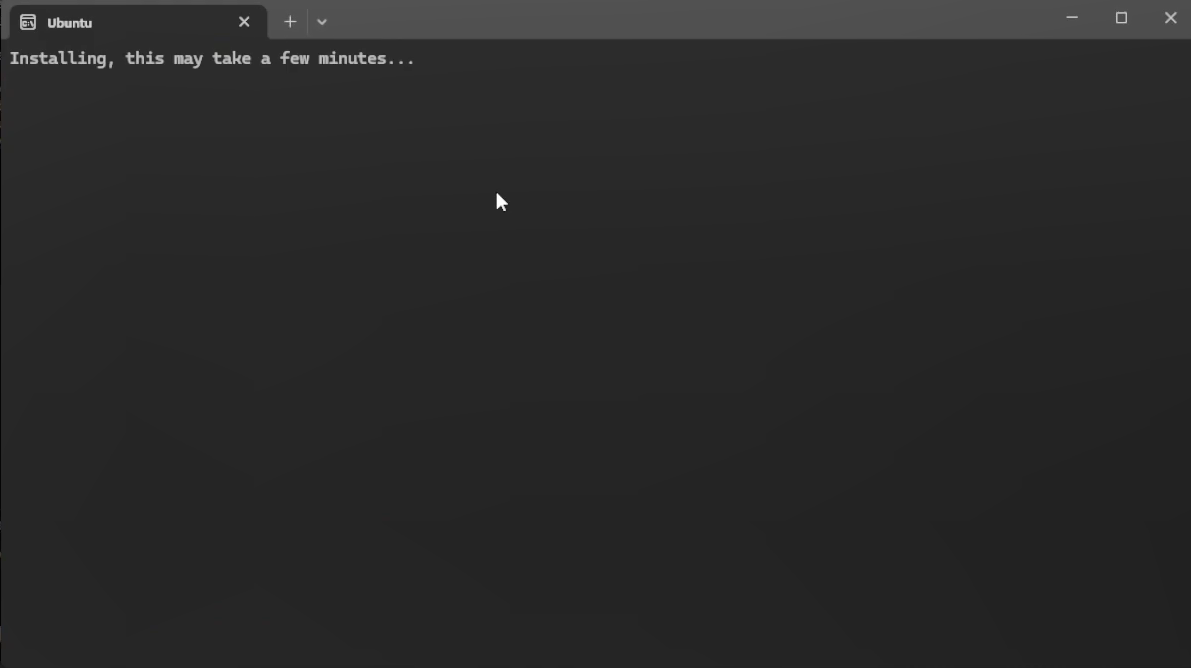
It restarts the necessary services.
The initial download and installation of the required components and the Ubuntu image can take anywhere from 5 to 15 minutes, depending on your internet connection and system speed. Do not close the window until the process is complete.
After the installation process completes, a new Ubuntu terminal window will open automatically. You will be prompted to create a UNIX username and a password.
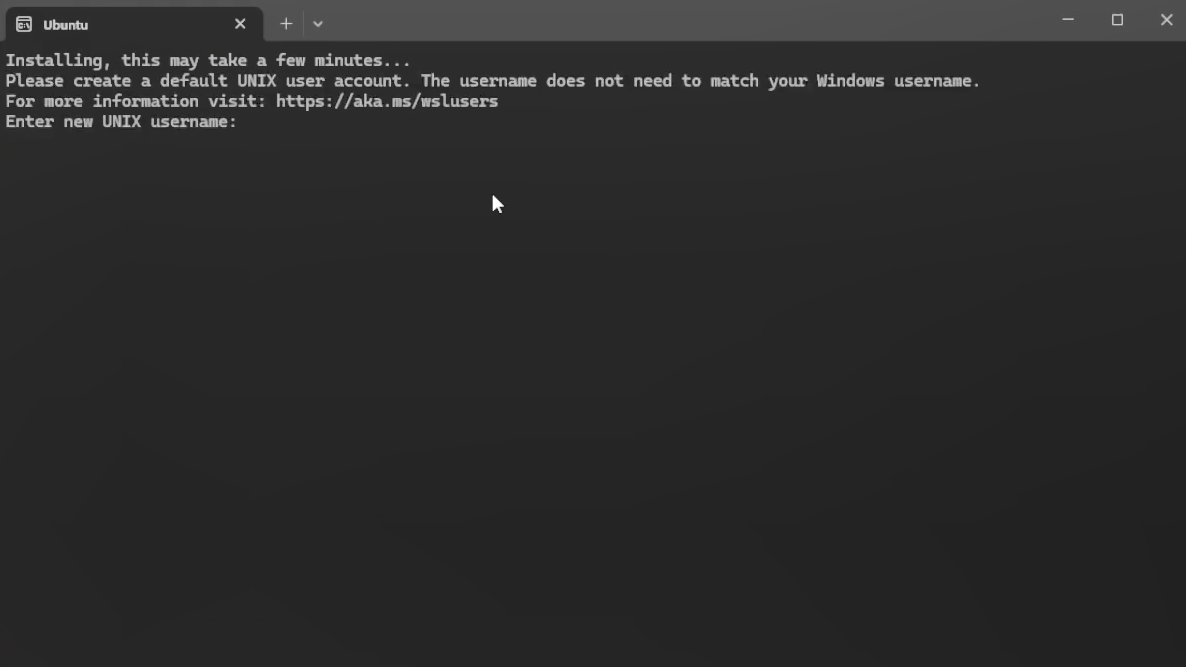
When entering your password, the characters will not be displayed on the screen for security reasons (this is standard Linux terminal behavior). Type your desired password carefully and press Enter.
Once successfully configured, your new username will be displayed as part of your terminal prompt (for example, yourusername@DESKTOP-XXXXXX:~$).
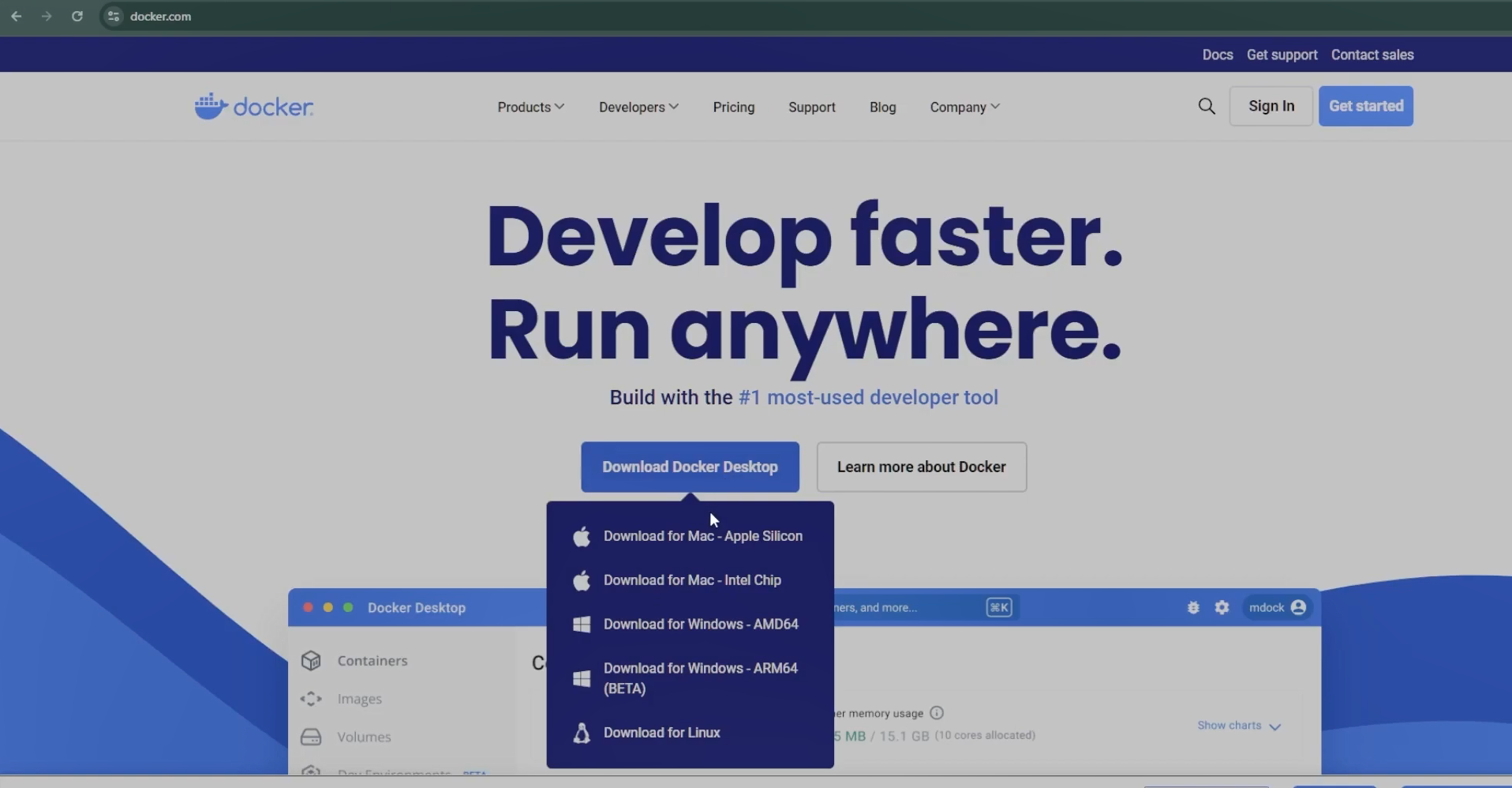
Look for the Docker Desktop for Windows download link. Ensure you download the installer that matches your CPU architecture (for example, Windows - AMD64 for modern systems).
Run the downloaded installer (for example, Docker Desktop Installer.exe). During the installation, make sure the box for Use WSL 2 instead of Hyper-V is checked. This is vital for Docker to integrate seamlessly with the Linux environment you just set up.
Follow the prompts to complete the installation. A system restart may be required.
After the reboot, launch Docker Desktop from your Start Menu. It will take a few moments to start up, showing the whale icon in your system tray.
Verification and integration
Once Docker Desktop is running, open the Settings menu (the gear icon).
Click Resources, then navigate to the WSL integration tab.
Ensure that the Enable integration with my default WSL distro option is toggled ON, and specifically verify that your Ubuntu distribution is enabled. This connection allows Docker to manage containers directly from your Linux terminal.
Set up and run the midnight proof server
The Midnight Proof Server is the core component that your DApps will communicate with to execute zero-knowledge proofs and transactions. It is run via Docker for consistency.
Downloading the Docker image
Open your Docker Desktop application and navigate to the Explore section (or use the search field at the top). Search for midnightnetwork/proof-server and download the latest image.
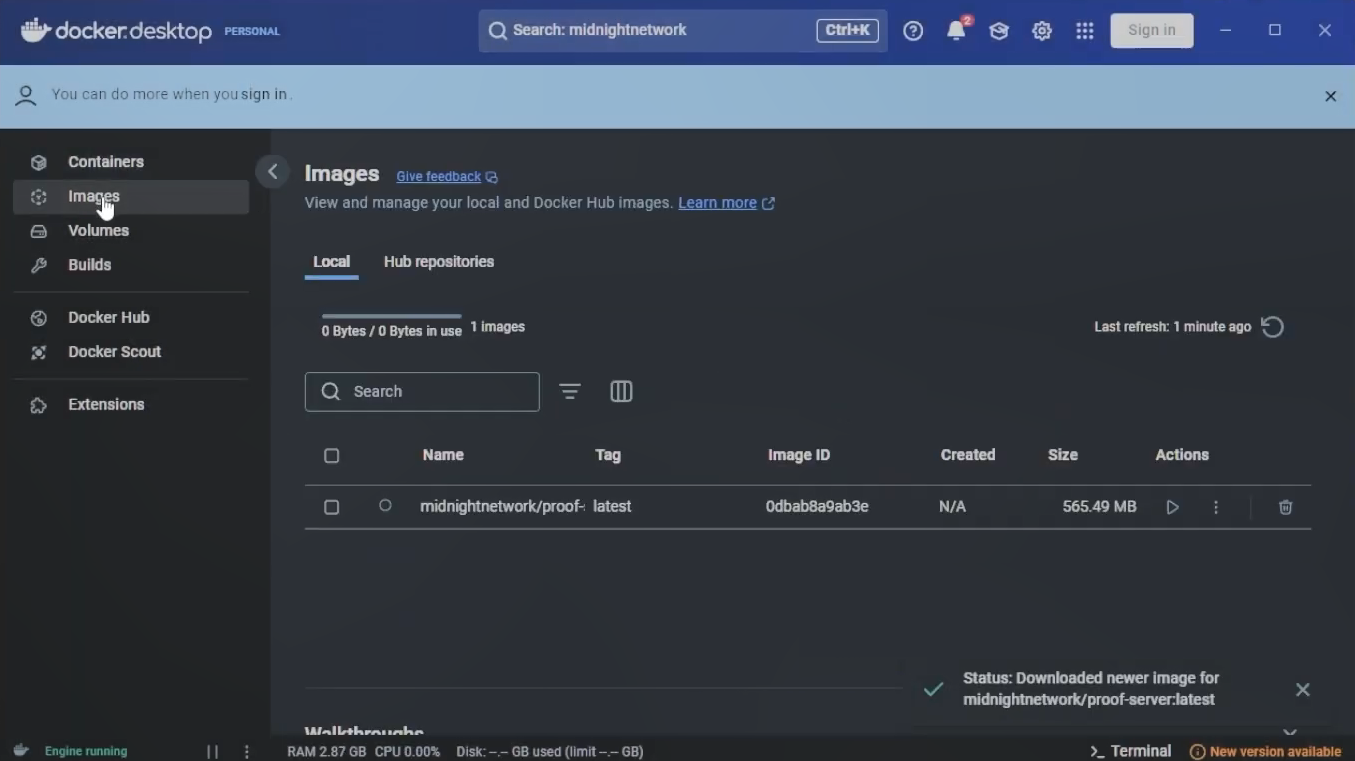
Running and configuring for testnet
When you click Run within Docker Desktop, the proof server starts, but it defaults to targeting a local, private network configuration. To connect to the Midnight Testnet, you must run the container with the correct environment variables.
Instead of using the Docker Desktop UI to start the container, open your Ubuntu terminal and execute the following command:
docker run -p 6300:6300 midnightnetwork/proof-server -- midnight-proof-server --network testnet
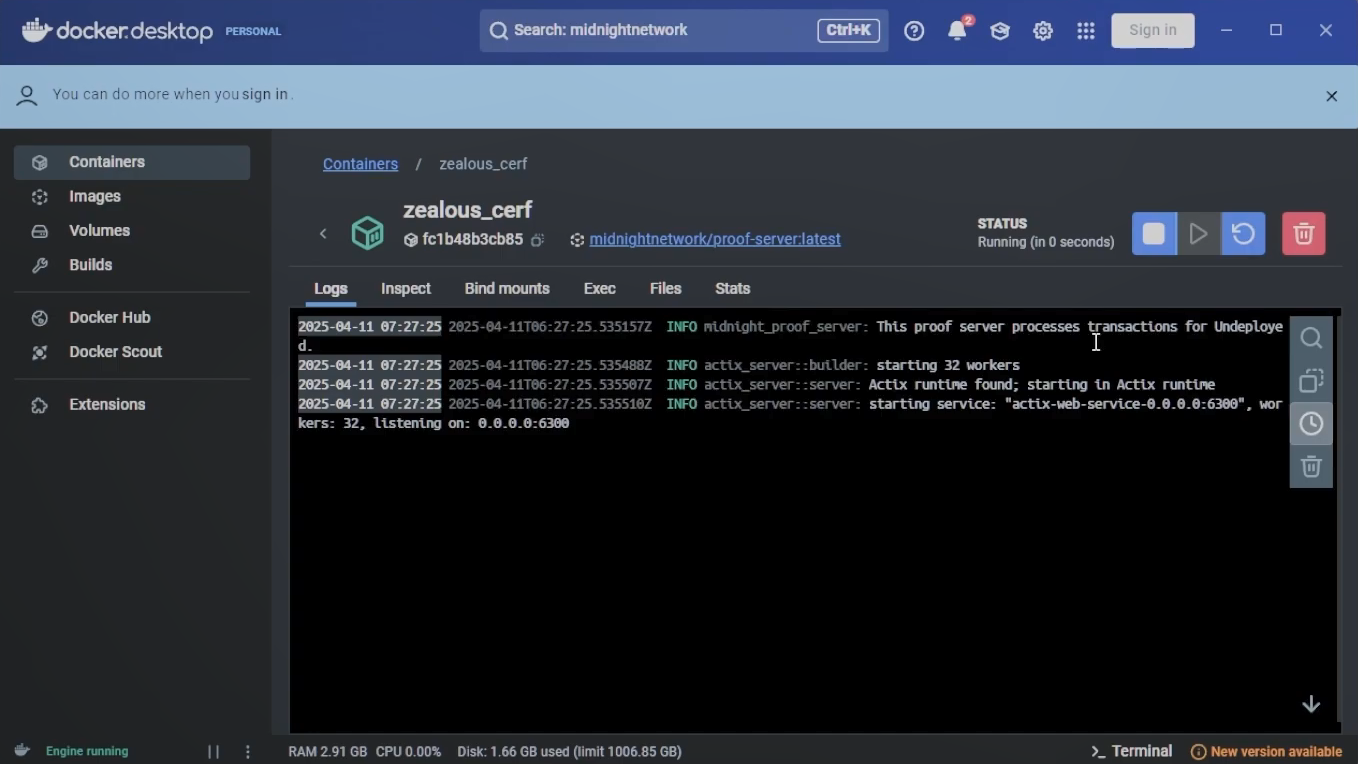
To make it useful for development, we must explicitly configure it to connect to the Midnight Testnet.
Return to the Midnight Developer documentation.
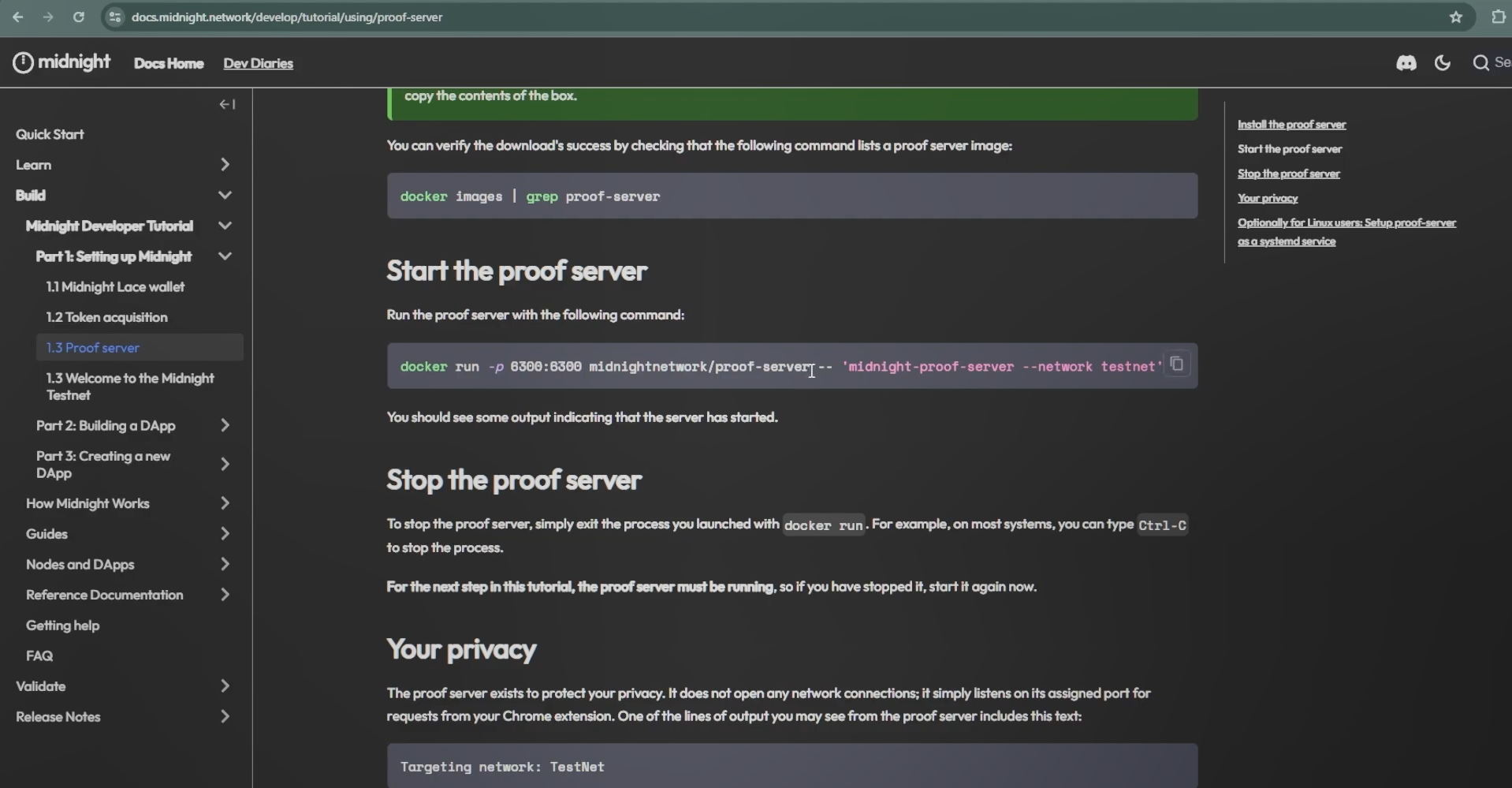
Navigate to the relevant tutorial: Midnight Developer Tutorial > Tutorial 1.3 Proof Server.
Scroll down to the Start the proof server sub-section. The documentation provides a specific command optimized for connecting to the Testnet. Copy this exact command. It will look similar to a standard docker run command but with specific environment flags attached.
Open Windows PowerShell (or your WSL terminal, if preferred).
Paste the command you copied in the previous step and press Enter.
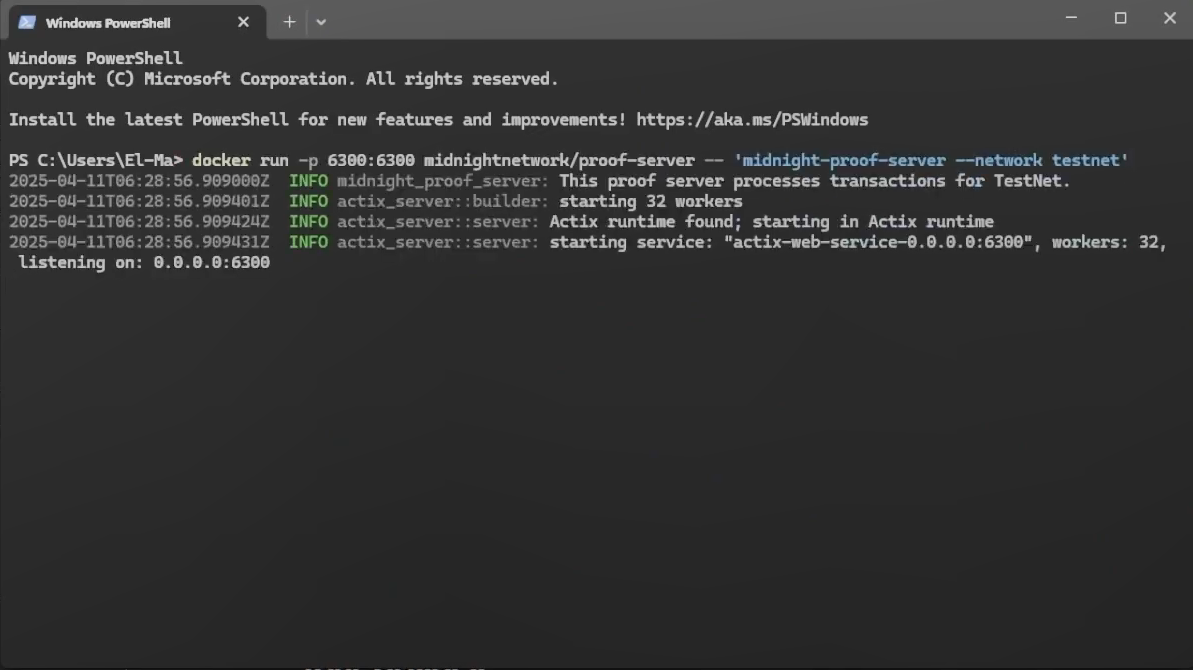
This command will instruct Docker to launch the proof server container, map the necessary ports, and most importantly, set the environment variables that force it to target the public Midnight Testnet nodes.
Install the Compact compiler
Compact is Midnight's smart contract language. Since you are using a Windows machine, you must install the compiler inside your WSL Ubuntu terminal to ensure it works with the rest of the Midnight toolchain.
- Open your Ubuntu terminal (WSL).
- Run the following command to install the Compact binaries:
curl --proto '=https' --tlsv1.2 -LsSf https://github.com/midnightntwrk/compact/releases/download/compact-v0.4.0/compact-installer.sh | sh
- The installer script automatically updates your path. To apply these changes to your current session, reload your shell configuration:
source ~/.bashrc
- Verify the installation by checking the version:
compact --version
- Update to the latest version to ensure you have the most recent features:
compact update
Install the Compact VS Code extension
The Compact VS Code extension provides syntax highlighting and real-time error checking, which is essential for writing smart contracts.
- Download the latest VSIX package from the Compact VS Code extension release page.
- Open VS Code.
- Go to the Extensions view (press
Ctrl+Shift+X), click the ... (More Actions) menu at the top-right of the extensions pane, and select Install from VSIX.... - Select the
.vsixfile you just downloaded to complete the installation.
Conclusion
Congratulations! You've successfully setup Midnight's development tools on your Windows machine using WSL.
Now that your environment is ready, you can begin building. Head over to the Compact documentation to start writing your first smart contracts using the Compact programming language.